
Time Out Learning
Programme for children in workshops
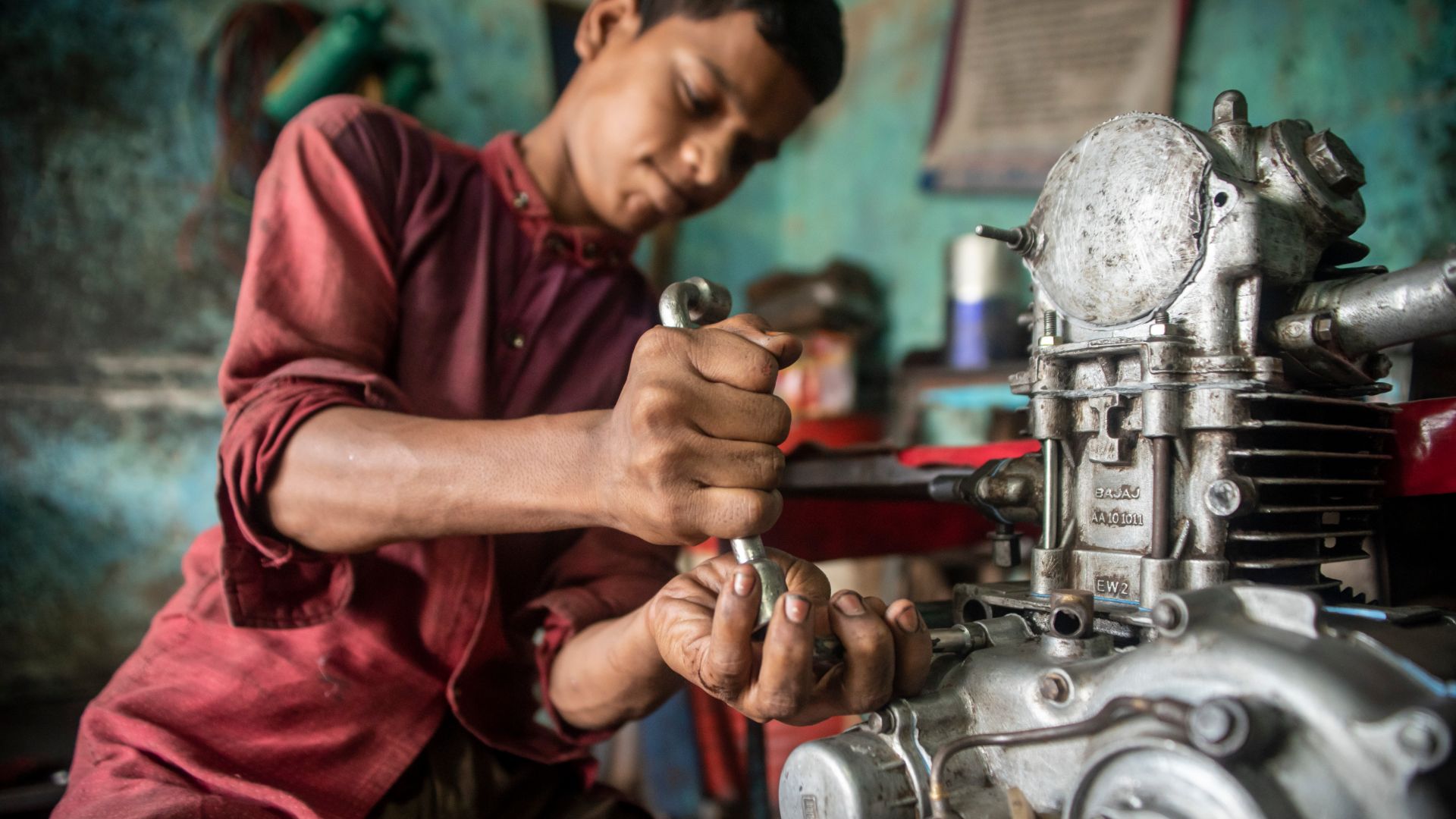
Hazardous child labour is work in dangerous or unhealthy conditions that could result in a child being killed, or injured or made ill as a consequence of poor safety and health standards and working arrangements. It can result in permanent disability, ill-health and psychological damage.
Child labour is a major issue in most low- and lower-middle-income countries in the world and Bangladesh is no exception.
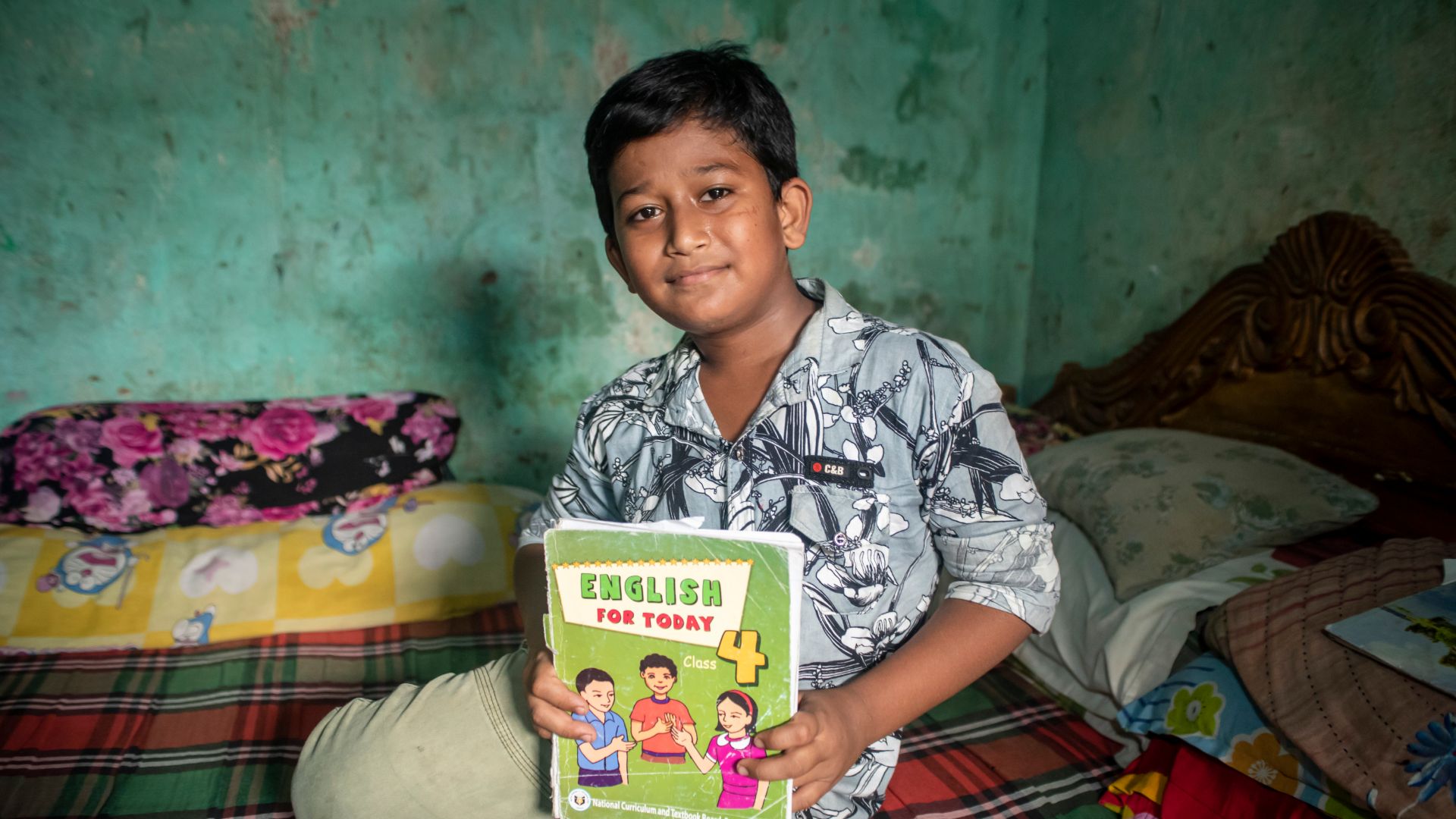
Instead of going to school and enjoying their childhood, many children are made to work to support their families and for their own livelihood. Despite it being against the law to employ children to work underneath cars, strip paint, weld metal, empty batteries and many other dangerous tasks, over 1.2 million children are employed in this way across Bangladesh. These children work for 14 hours a day in appalling conditions for no or low pay, they are routinely ill and frequently injured.
Time Out Learning
Following a baseline study that revealed that 3,000 children are employed in hazardous jobs in Sylhet City, UKBET initiated our pioneering work with children doing hazardous work in workshops and small businesses in Sylhet.
Our approach included careful advocacy work with employers, families and working children. Working children attend three education sessions a week at a centre near to their workplace. They are taught by specially trained community teachers supporting children to progress out of hazardous work into school, vocational training and work that is safe.
Time Out Learning curriculum
Working in close partnership with FIVDB, we developed a special curriculum which enables children of any age and level to develop basic literacy and numeracy skills, aligned to the national curriculum. Another important part of the curriculum for all of the working children we support is life skills which include, for example, health, well-being, child rights, child marriage and also supports children to get their births registered.
Funders
Our Time Out Learning programme has been funded by individual donations.
Impact
Since 2014 we have engaged over 1,439 young boys doing hazardous work aged 5 – 14 . Over 900 children have progressed into education or vocational training. We have reached over 6,700 family members in total, with over 2,200 medical prescriptions given and 140 families supported with a small business grant through our Family Futures programme.
In addition:
- All children have had their births registered
the numbers of accidents and illnesses in workplaces has reduced significantly - Not one sibling has followed their older brother into work
- Employers are using the safety equipment we have provided
- Local employers are starting to change their practice in relation to employing children.



We have chosen to align our vision for our Hazardous Labour programme with the 17 United Nations Sustainable Development Goals. Not only do these goals offer a comprehensive guide to solving the challenges facing our planet, but they act as a focal point for all of us to rally together to create a more equitable world.
See below which goals our programme is working towards.

Our working children programmes
We reach and teach the most vulnerable and excluded working children forced into hazardous domestic labour. Our programmes below empower these young girls and their families through access to education, tailored vocational training, and livelihood support - offering them real alternatives to exploitation. By removing financial and social barriers, our programmes pave the way for long-term learning, dignity, and opportunity.
Doorstep Learning
Although not officially recognised as being ‘hazardous’, domestic work presents many dangers for working children both from the labour they are asked to do and the incidence of sexual and physical assault.
Family Futures
Poverty drives families to send their children to work rather than school. Our team works with families of the children in our education programmes to help them create income through self-employment and referring them to other agencies for support.
Historical programmes
The programmes below are no longer active. Initiated in 2013, these programmes aimed to help boys working in hazardous occupations. Despite their popularity, the number of boys progressing out of child labour was disappointing. Given limited resources, the Trustees have decided to close these programmes in February 2024 and focus on our Doorstep Learning and Family Futures programmes which continue to have great success and progression rate.
Waste Pickers
This pilot project will bring basic education to 50 children working as waste collectors in Sylhet. Children will be taught literacy, numeracy and life skills by specialist community teachers three times a week in education centres close to their workplace.
Hazardous Work
Following a baseline study that revealed that 3,000 children are employed in hazardous jobs in the city of Sylhet, we initiated our pioneering education programme with children doing hazardous work in workshops and small businesses in Sylhet.
Donate and support our work
Education can change lives.